
What Is the Measure?
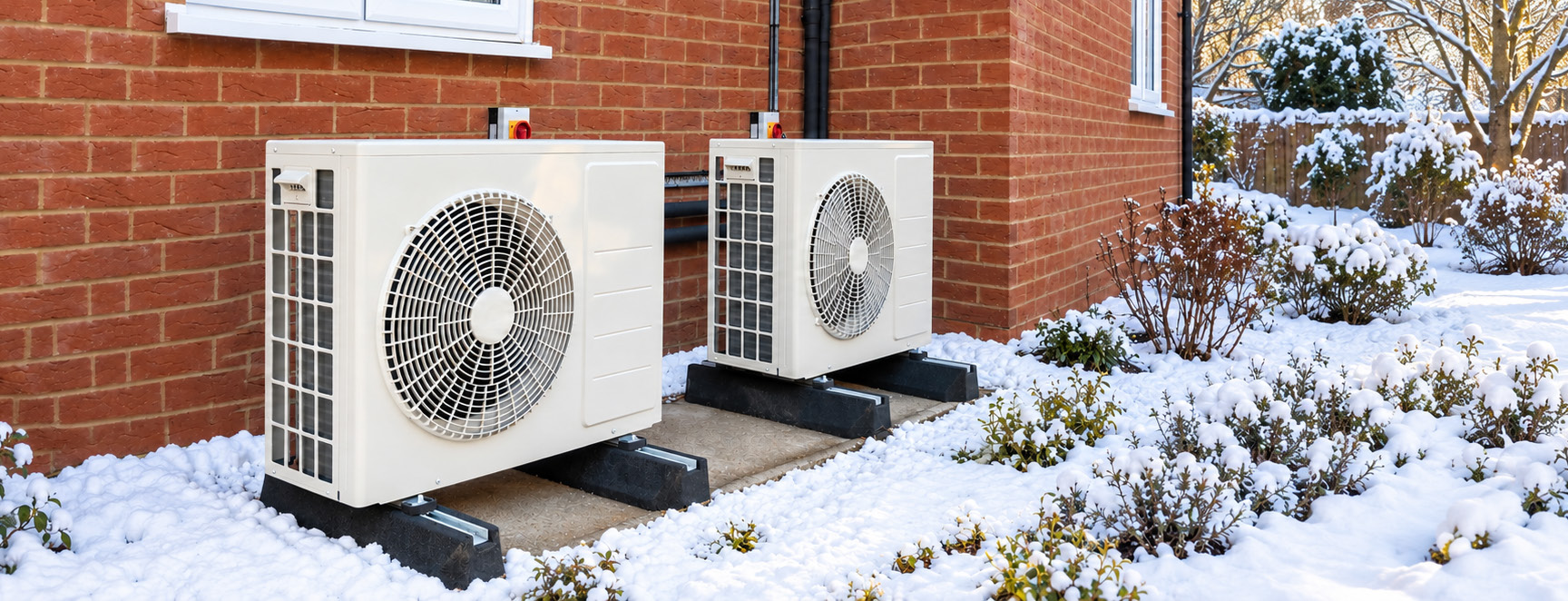
Electrifying space heating requires equipment that can perform efficiently when heating demand is highest. Cold-climate air-source heat pumps (ccASHPs) and variable refrigerant flow (ccVRF) systems provide all-electric space heating and cooling. Unlike electric resistance or fossil-fuel heating, these systems transfer heat between the outdoor air and the building.
Although ccASHP and ccVRF systems use the same basic heat-pump technology, they differ in how they serve building loads:
- ccASHP: Generally serves one thermal zone or indoor unit through an independent refrigeration circuit. Systems may be ducted, ductless, or packaged.
- ccVRF: Serves multiple indoor units through a shared refrigerant circuit connected to centralized outdoor equipment. System-level controls coordinate operation while allowing independent zone control.
What distinguishes these systems as cold climate is their ability to retain greater heating capacity and efficiency at low outdoor temperatures. Standard air-source heat-pump performance may decline more significantly as temperatures fall below approximately 35°F. Cold-climate features help extend efficient compressor-based heating and reduce reliance on supplemental heat.
Key Cold-Climate Features and How They Work
Cold-climate ASHP and VRF systems use the same basic refrigeration cycle as standard heat pumps, with enhancements designed for low-temperature performance. As temperatures decrease, the compressor must overcome a larger pressure difference, making it more difficult to maintain heating capacity and efficiency. Cold-climate systems address these challenges through several key technologies:
- Variable-Capacity Compressors and Refrigeration- Cycle Enhancements: Inverter-driven compressors adjust output as outdoor conditions and building loads change. Some systems use enhanced vapor injection or similar refrigeration-cycle enhancements to increase refrigerant mass flow, moderate discharge temperatures, and support heating capacity at low outdoor temperatures.
- Optimized Heat Exchange and Refrigerant Management: Outdoor heat exchangers, variable-speed fans, sensors, and expansion devices work together to maintain appropriate refrigerant pressures and temperatures while continuing to extract heat from cold outdoor air.
- Adaptive Defrost and Ice Management: Frost accumulation on the outdoor coil can reduce heat transfer during cold-weather operation. Demand-based defrost controls monitor system conditions and initiate defrost only when needed, reducing unnecessary energy use and comfort disruptions.
- Advanced System Controls: Controls coordinate compressor speed, fan operation, refrigerant flow, and post-defrost recovery. In ccVRF systems, these controls also coordinate operation across connected indoor and outdoor units.
- Supplemental Heat Management: Where supplemental heating is installed, staging and lockout controls can prioritize heat-pump operation and limit unnecessary operation of backup heating equipment.
Example conceptual configuration of an enhanced vapor-injection refrigeration cycle

The figure above illustrates an enhanced vapor-injection refrigeration cycle, where an internal heat exchanger supports refrigerant injection into the compressor at an intermediate pressure.
System Configurations
Cold-climate ASHPs are available in several single-zone configurations, while ccVRF systems serve multiple zones through an integrated refrigerant system.
Central Air-Conditioning Heat Pump
A central air-conditioning heat pump is a single-zone air-to-air system with an outdoor unit connected to ducted or ductless indoor equipment. Each system operates through an independent refrigerant circuit.
Packaged Terminal Heat Pump
A packaged terminal heat pump is a single-zone, air-to-air system in which the major heating and cooling components are contained within a packaged unit.
Single-Package Vertical Heat Pump
A single-package vertical heat pump (SPVHP) is a single-zone, air-to-air system with the major heating and cooling components arranged within a vertically oriented packaged cabinet.
VRF Multi-Split Heat Pump
A VRF multi-split heat pump connects one or more centralized outdoor units to multiple indoor units through a shared refrigerant circuit. Indoor units may be ducted, non-ducted, or a combination of both. System-level controls coordinate operation across the integrated system.
Equipment Selection Considerations
Select equipment based on available heating capacity and coefficient of performance (COP) at or near the project’s winter outdoor design temperature. Review Air-Conditioning, Heating, and Refrigeration Institute (AHRI) ratings and manufacturer extended-performance data at 17°F, 5°F, or the nearest available condition.
Equipment sizing should reflect the building’s design heating load and verified low-temperature capacity. Consider system configuration, zoning needs, and whether supplemental heating is necessary. Where backup heat is provided, controls should prioritize heat-pump operation and limit unnecessary supplemental heating.
Pairing Considerations
Cold-climate systems can pair with other CEDA high-performance measures that improve HVAC controls and reduce unnecessary operation. VRF Systems with Occupancy-Based Controls can adjust zone setpoints during vacant periods and restore occupied setpoints when occupants return. Single-Zone Heat Pumps with Smart Thermostats can support scheduling, automated setpoint management, and controls that prioritize heat-pump operation.
Cost Considerations
Cold-climate systems generally have higher upfront costs than comparable standard heat-pump systems. Costs vary by equipment type, system capacity, installation requirements, controls, and commissioning needs. Multi-zone ccVRF systems may have additional costs associated with refrigerant piping, system-level controls, and more complex installation.
System configuration and existing building conditions can influence both upfront and ongoing costs. Reusing compatible ductwork or existing wall sleeves may reduce installation costs in retrofit applications. Packaged terminal heat pumps can avoid central air-distribution costs but require separate units for each zone, which may increase maintenance costs in larger buildings.
Some higher upfront costs may be offset by reducing supplemental heating or avoiding associated infrastructure. Efficient part-load operation can also reduce energy use, particularly where heating and cooling loads vary throughout the building. Overall cost-effectiveness depends on system design, climate, utility rates, and operating conditions.
What Are the Benefits?
- Supports building decarbonization by replacing or reducing fossil-fuel space heating, lowering on-site combustion and associated greenhouse gas emissions.
- Reduces or eliminates infrastructure associated with gas-fired space heating, such as gas piping and combustion venting.
- Reduces operational costs through efficient heat-pump operation, depending on climate, utility rates, and system operation.
- Maintains stronger heating capacity and efficiency at low outdoor temperatures, supporting reliable comfort during colder conditions.
- Improves part-load efficiency by using variable-capacity compressors to adjust system output as building heating and cooling loads change.
- Provides more flexible electrification pathways by offering cold-climate options across central, packaged, vertical, and VRF system configurations.
What Are the Challenges/Constraints?
- Cold-climate equipment and advanced controls may have a higher upfront cost than standard heat-pump systems.
- Equipment must be selected and sized using verified low-temperature performance data to ensure adequate heating capacity and limit reliance on supplemental heat.
- Proper controls and commissioning are important to coordinate variable-capacity operation, defrost cycles, zone demands, and supplemental heating.
- Outdoor units require adequate airflow, service access, noise consideration, and management of water or ice produced during defrost operation.
What Are the Qualifications for CEDA Inducements?
To be eligible, a project must:
- Be located within the service territory of SCE, SoCal Gas, PG&E or SDG&E.
- Be enrolled in the CEDA program and meet all standard program participation requirements.
- Implement a qualifying cold-climate HP system and submit the required support documentation.
- Provide design and equipment documentation consistent with the permitted documents set for the project (e.g., equipment schedules or submittals reviewed and approved by the Engineer of Record, sequences of operation, and control/points information as applicable).
- Participate in equipment data collection efforts, if selected, to support CEDA and Code Readiness objectives.
Note: Project may be selected by PG&E or the CEDA team for future case study or market learning opportunities. Measure requirements are subject to change; this guide reflects information available as of November 2026—for the most current measure requirements, contact CEDA@willdan.com.
