

What is the measure?
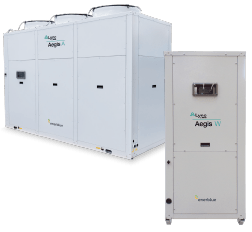
A heat pump water heater of any size or configuration (packaged, split, or tankless) that utilizes CO2 (R744) as the refrigerant. Many building codes are pushing designers and developers to shift their projects from typical natural gas fired water heating systems to all electric designs. States, cities and local jurisdictions are banning natural gas and electric resistance heating elements for new construction and encouraging the adoption of heat pump water heaters for domestic use. These water heaters offer many inherent benefits, and integrating them into a centralized design helps them stand out against the competition.
R744 replaces traditional refrigerants with higher GWP, such as R134A. The indoor/outdoor unit flexibility is similar to a traditional heat pump water heater, but a CO2 heat pump water heater may require an additional swing tank, maintenance tanks and controls.
Sizing the system
 A key part of the design process is to appropriately size the equipment with the building loads. As we add more components and advanced control strategies, we must select each component to work together effectively. A common tool for this is to use Ecosizer developed by Ecotope. Ecosizer helps determine the equipment size and capacities for multifamily buildings. The tool considers factors like apartment quantities, design temperatures, layout, and load shifting strategies.
What are the benefits?
-
CO2 is able to generate water at higher outlet temperatures than other refrigerants. This is particularly useful for applications such as heat reclaim and thermal storage
-
Currently R134A HPWHs need additional electric resistance heating starting somewhere between 110-140˚F. In the case of R744, no secondary heating source would be needed but many installations would likely still have a backup method
What are the challenges/constraints?
-
May require additional temperature maintenance tanks and additional controls to prevent scalding
-
Premium pricing, more limited equipment availability and sizing than traditional refrigerants (R143A, R513A)
-
CO2 operates at a higher pressure so there is need for more robust and expensive components
-
May be limited to applications up to 2,000 kBtuh
-
COP for CO2 HPWH ranges from 2-5
-
Product durability is still being researched as it is a relatively new technology for water heating
-
Indoor/outdoor unit flexibility similar to traditional HPWH
-
R744 is non-toxic, non-flammable, and has an Ozone Depletion Potential (ODP) of zero. Its Global Warming Potential (GWP) is one, compared to R134a and R410a, which have GWP values of 1,430 and 2,088, respectively.
